When Water Is Public but Access Is Not
A principled look at navigable creeks, property rights, and stewardship
On July 7, 2017 at approximately 1:00 p.m., a ruptured sewage discharge pipe was discovered emptying that raw sewage into a small creek in Ohio. Photos were taken. The county was notified. An email response was later received confirming the report.
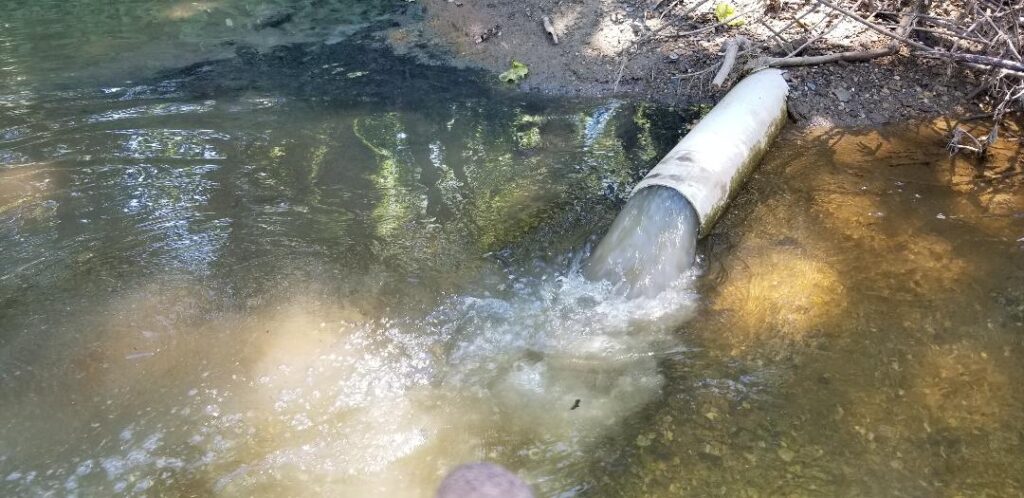
The discovery raises a broader question — not about one landowner, and not about one angler — but about how we define responsibility and access when public wildlife exists within privately bordered water.
This is not a complaint.
It is a structural discussion.
The Core Tension
Across much of the United States, including Ohio, the legal framework works like this:
- Fish and wildlife are held in trust for the public.
- Navigable waters are considered public corridors.
- The streambed and banks are often privately owned.
Management authority belongs to agencies such as the Ohio Department of Natural Resources under the Public Trust Doctrine.
This creates a layered system:
| Element | Ownership Status |
|---|---|
| Fish | Public |
| Water (if navigable) | Public |
| Streambed & Banks | Often Private |
That structure is legally established.
But structurally, it creates friction.
The Principle at Stake
The issue is not whether private property rights matter. They do. They are foundational.
The issue is whether a publicly owned natural resource can be functionally inaccessible — and whether the water corridor itself should be treated as a right-of-way for lawful public use.
There is a meaningful distinction between:
- Crossing dry land without permission (clear trespass)
- Camping or occupying private banks (clear trespass)
- Damaging property or leaving trash (criminal behavior)
- Using the water corridor itself for lawful passage and recreation
Many states interpret that last category differently. For example:
- Montana allows public use up to the ordinary high-water mark on navigable streams.
- Michigan recognizes broad public rights in navigable waterways.
- Other states restrict contact with privately owned streambeds.
This is not a settled national philosophy. It is a patchwork.
A Question of Consistency
Fishing licenses are required to pursue fish that are publicly owned. Those funds support conservation, hatcheries, habitat work, and enforcement.
But when physical access to those public resources depends almost entirely on private permission, a structural question emerges:
Should a publicly held wildlife resource exist inside a corridor that cannot be lawfully touched?
That is not an emotional question. It is a rights question.
Stewardship and Accountability
The July 7, 2017 sewage rupture illustrates another layer of the issue.
If a member of the public had not observed and reported the discharge, the contamination could have continued far longer. Waterways do not self-report pollution. They rely on visibility.
Public presence often functions as informal oversight.
When lawful users are present:
- Pollution is noticed.
- Illegal dumping is reported.
- Habitat damage is observed.
- Agencies are alerted.
Restricted access can unintentionally reduce accountability.
That does not mean landowners are responsible for pollution. It means public waterways benefit from public stewardship.
Drawing Reasonable Lines
A rights-based framework can recognize both interests simultaneously:
✔ No walking across private fields without permission
✔ No camping outside the active water corridor
✔ Severe penalties for property damage or littering
✔ Clear consequences for environmental violations
✔ Defined public use rights within navigable water corridors
This is not anti-property.
It is boundary clarification.
The Larger Question
The real issue is not about anglers versus landowners.
It is about how a nation balances:
- Strong private property rights
- Public trust ownership of wildlife
- Environmental stewardship
- Practical access
Where should the boundary sit?
At the water’s edge?
At the streambed?
At the high-water mark?
Different states answer differently.
A National Conversation Worth Having
Reform, if it ever occurs, will not come from frustration. It would come from:
- Legislative clarity
- Defined corridor rights
- Strong enforcement of anti-damage laws
- Respectful dialogue between landowners and lawful users
This is not about entitlement.
It is about coherence.
If wildlife belongs to the public, and waterways are public corridors, then the legal framework governing them should reflect that clearly — while still preserving the dignity and rights of private landowners.
That is not a rant.
It is a structural question about where public trust and private ownership meet.
And that boundary deserves thoughtful examination.
Leave a Reply
You must be logged in to post a comment.